
Industry News & Compliance Update
Fanvue moderation appeals: the 2026 evidence checklist

Policy Watch, checked 30 July 2026. Fanvue’s June 2026 policy refresh added more detail about reasons, automated moderation and appeals. The practical issue is that the current documents describe different time windows for different processes. A creator should identify the route and preserve evidence immediately, not assume the longest period applies.
What changed in June 2026
Fanvue’s 14 June changelog says users will receive reasons when content or accounts are removed or restricted and will be told when automated tools were used to moderate content or flag a violation. It also says the Creator Terms consolidated account and earnings actions and expanded the window for certain disputes. The current Content Moderation & Protection Policy describes automated screening followed by human review for flagged content.
These are platform statements about process, not a guarantee that every notice will contain every detail. If a notice is incomplete, record what is missing and ask for the cited rule, decision type, effective time and review route.
Three documents, three route-specific windows
- The Content Moderation & Protection Policy says a formal appeal against moderation enforcement must be submitted within seven calendar days.
- The Complaints Policy says a user affected by enforcement due to a complaint may appeal within 14 days of the enforcement notice.
- The Creator Terms say disputes involving Creator Earnings forfeiture or account termination or suspension must be submitted within six months of the action.
These provisions appear to address different decisions or review paths. Do not merge them into one universal deadline. If classification is uncertain, preserve the record and use the earliest plausible deadline while asking support to confirm the correct route. For a high-value earnings, contract or legal dispute, obtain qualified advice for the relevant jurisdiction.
Build the evidence packet before writing the argument
- Notice: save the complete message, headers, timestamp and delivery channel.
- Decision object: identify the exact content URL or ID, account function, payout entry or complaint outcome affected.
- Rule: save the policy URL, section and updated date cited by the notice. Preserve the version visible at the time.
- Automation disclosure: note whether the notice says automated tools flagged or decided any part of the case.
- Timeline: list upload, review, notice and prior support contacts in UTC as well as local time.
- New context: add only evidence that addresses the stated reason. Keep facts, inference and requested remedy separate.
Protect consent and identity records
An appeal can require context about age, identity, rights or collaborator consent. That does not make a public screenshot or ordinary email thread a safe archive for identity documents. Keep sensitive originals in controlled storage, share only through the platform’s approved route, redact irrelevant fields where permitted, and record exactly what was transmitted.
Do not alter a record after the notice in a way that destroys the original evidence. Preserve the original file and create a separate working copy for annotations or redaction.
Write a narrow appeal
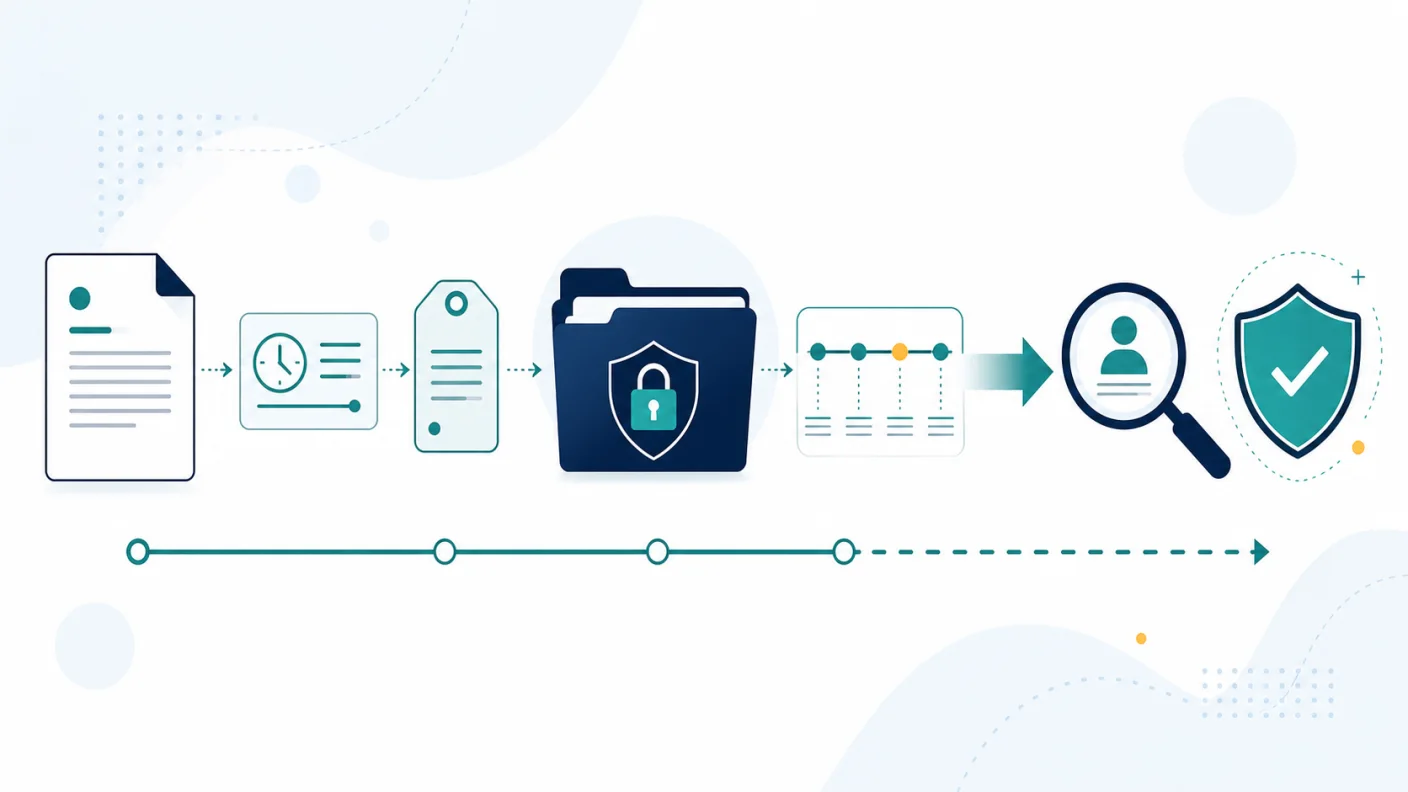
A useful appeal maps evidence to the platform’s stated reason:
- identify the decision and requested remedy in the first paragraph;
- quote or paraphrase only the relevant rule, with its dated URL;
- state the factual disagreement and attach the smallest evidence set that supports it;
- acknowledge any real error and explain the corrective action when appropriate;
- ask for confirmation of receipt, the route used and the expected review stage.
Avoid threats, invented precedent and unrelated screenshots. A clear record is easier to review and safer to escalate to an adviser if the platform route fails.
Why this matters
A creator can lose an otherwise reviewable case by missing a short route-specific deadline, preserving only a cropped screenshot or arguing against a rule that was not actually cited.
What to check now
- Is this content moderation, complaint enforcement, earnings forfeiture, suspension or termination?
- Which current policy names the route and deadline for that decision?
- Does the notice identify the reason and any automated moderation involvement?
- Have the original notice, content ID, policy version and UTC timeline been preserved?
- Does the submission request a concrete remedy and include only relevant evidence?
Editorial boundary: this report describes Fanvue’s published process as checked above. It is not legal advice and does not promise a platform outcome.
Legal & Regulatory Compliance: Account Security, Payouts & Moderation
For independent digital creators and media publishers, understanding platform governance, appeal mechanisms against automated moderation flags, and enforceable payout terms is critical. Authoritative platforms provide explicit Service Level Agreements (SLAs) for moderation reviews and cite specific clause violations when actioning accounts.
Furthermore, creator revenue resilience depends on robust chargeback mitigation protocols and automated audience export capabilities. Reputable platforms deploy machine-learning anti-fraud layers to shield creators from illegitimate subscriber chargebacks while maintaining transparent escrow hold periods.
Creator Security & Contract Verification Checklist
• Archive a local copy of platform Terms of Service upon onboarding to preserve rev-share agreements.
• Verify minimum withdrawal thresholds, currency conversion spreads, and clearing velocity.
• Ensure the availability of one-click GDPR/CCPA data export tools prior to platform migration.
• Enforce hardware-based two-factor authentication (2FA) across all administrative accounts.
Frequently Asked Questions for Creators (FAQ)
How can creators protect earnings during a moderation review?
Maintain comprehensive ticket records, archive proof of content consent, and submit formal appeals within the designated administrative window referencing published community standards.
What payout channels offer the highest settlement reliability?
Direct clearing house transfers (ACH/SEPA/SWIFT), dedicated creator payout gateways, and multi-currency crypto rails provide optimal resilience against third-party merchant processor disruptions.
Can a platform withhold earned revenue indefinitely?
Under prevailing commercial regulations, platforms must issue structured notifications specifying the regulatory basis for any temporary escrow holds, along with formal remediation paths.
How often are content safety and card brand compliance rules updated?
Tier-1 creator platforms audit compliance frameworks on a continuous basis to maintain adherence with global payment network mandates and jurisdictional age assurance standards.
Drawbacks, Limitations & Risks (Cons)
- International banking withdrawal thresholds: Standard payout processing routes enforce minimum account balances ($50 to $100) before initiating outbound wire settlements.
- Tiered transaction handling surcharges: Payment processor gateways impose dynamic transaction fees ranging between 2.9% and 5.5% depending on consumer payment rails.
- Stringent compliance verification windows: Onboarding and co-performer consent validation can require 24 to 48 business hours during peak compliance audit cycles.
UncensoredReviews Editorial Verdict
Our editorial team underscores that long-term creator sustainability depends on revenue diversification, regular subscriber audience backups, and proactive compliance monitoring across all monetized channels.
Featured Creator & Member Platforms
Verified terms of service, creator payout transparency, and platform policy audits: